Surface spraying fails against wood-destroying carpenter ants because worker ants forage outside while parent and satellite queens remain shielded deep within structural framing. In older residential pockets like the…
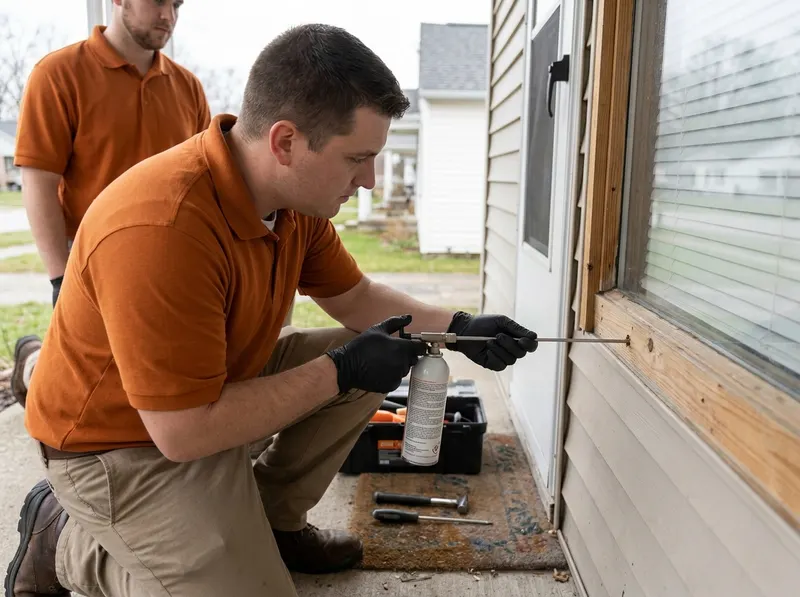
Surface spraying fails against wood-destroying carpenter ants because worker ants forage outside while parent and satellite queens remain shielded deep within structural framing. In older residential pockets like the North End Historic District and Laynewood, aging wood framing paired with roofline moisture leaks creates prime excavation territory for satellite colonies. Rather than dispersing workers with retail perimeter repellents—which often splits parent colonies into multiple sub-nests—a targeted void injection uses microscopic access points to flood the interior cavity. This structural void barrier halts gallery expansion immediately, delivering concentrated active ingredients straight to brood chambers and egg-laying queens without saturating exposed living areas.
Properties bordering mature tree canopies near Shawnee Park or along the bike corridors of Xenia Station face recurring pressure as foraging trails move from dead tree limbs into residential roof trusses and fascia boards. In neighborhoods such as Arrowood, Beverly Hills, and Windsor Park, window sill voids and basement rim joists often harbor moisture from seasonal humidity swings, softening timber enough for rapid excavation. Direct void injection bypasses the wood exterior, forcing product into the frass-cleared tunnels. Technicians map moisture signatures, drill discreet 1/8-inch ports into hidden baseboard lines or drywall seams, and inject stabilizing formulations that bond to gallery walls, ensuring structural preservation without demanding long-term contract lock-ins.
Every job gets a firm, written price after a free on-site visit.
Tell us about your carpenter ant gallery void injection job in Xenia and we'll send a clear, written quote — usually the same day.
 Home Shield Bug Removal